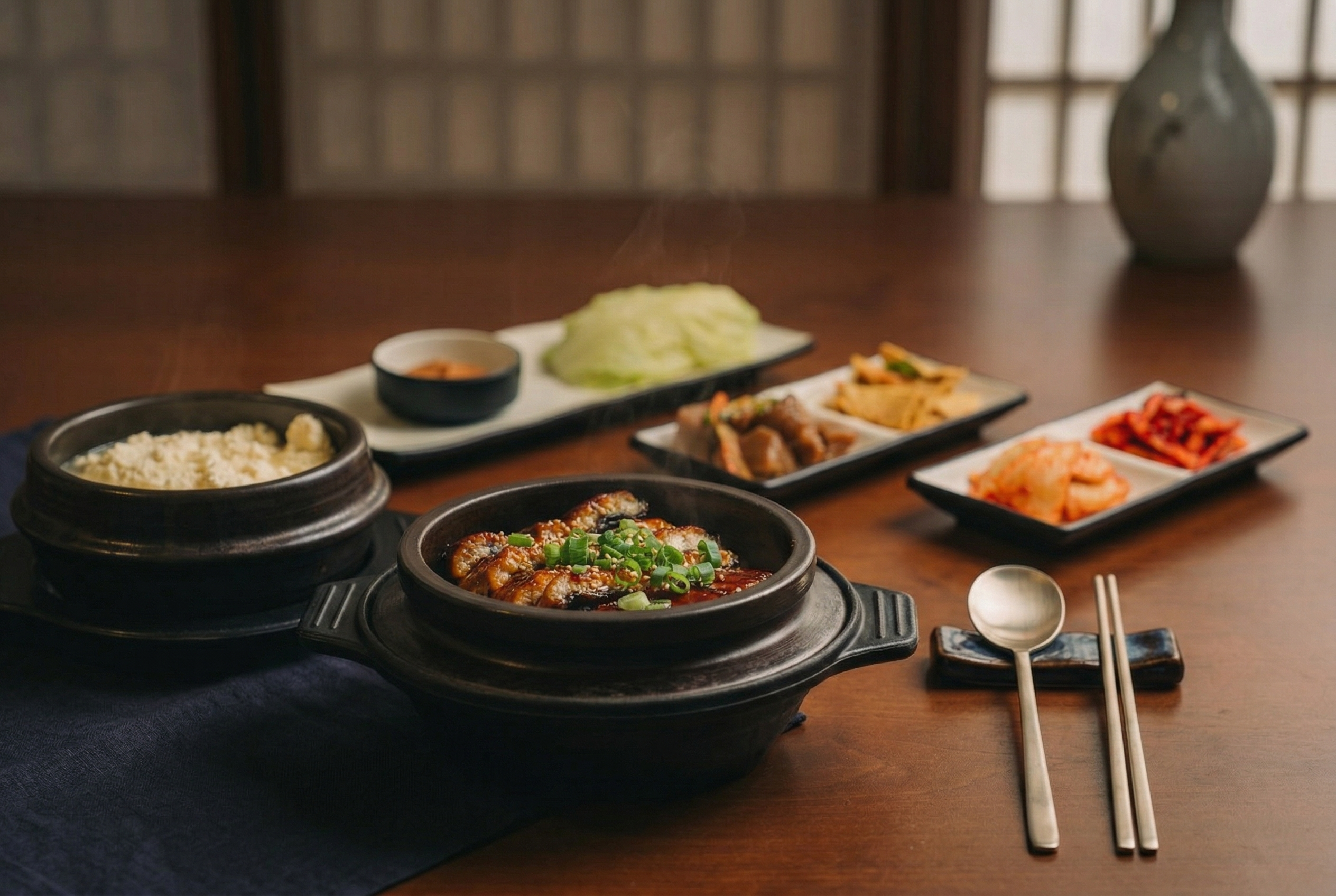
In Korean culture, a meal is never simply about eating. It is a living expression of respect — for the ingredients, for the people who prepared them, and for those seated beside you. Korean dining etiquette (식사 예절, siksya yejeol) is not a rigid rulebook, but a collection of quiet gestures passed down through generations that transform an ordinary table into something deeply meaningful.
Wait for Your Elders to Begin
One of the most fundamental expressions of Korean table manners is the act of waiting. In a traditional Korean meal, the eldest person at the table lifts their spoon first. This small pause before eating is a daily acknowledgment of respect and hierarchy — values woven into the fabric of Korean family life. At Dubu Gongbang, we honor this spirit by encouraging every guest to slow down, breathe, and be present with their meal before the first bite.
The Spoon Before the Chopsticks
Unlike Japanese or Chinese dining customs, the Korean table places the spoon — not chopsticks — at the center of the meal. The spoon is used for rice and soups, while chopsticks handle side dishes and other banchan. It is considered poor etiquette to use both simultaneously. Place one down before reaching for the other. This rhythm of intentional movement is a subtle art form, a way of giving each element of your meal its own moment of attention.
Banchan — The Heart of Communal Dining
Perhaps nothing embodies Korean food culture more beautifully than banchan (반찬) — the array of small shared side dishes that accompany every meal. Kimchi, seasoned vegetables, braised roots, and pickled accompaniments are placed at the center of the table not as individual portions, but as a shared expression of generosity. Do not transfer banchan to your own bowl; instead, take small amounts directly from the communal dish. This communal dining practice creates a sense of togetherness that is the essence of the Korean table.
Pouring for Others
In Korean dining etiquette, you do not pour your own drink. Keeping an eye on the glasses of those around you, and refilling them before they empty, is one of the most gracious acts at the Korean table. It is a gesture that says: I see you, I am here with you, and I care for your comfort. When someone pours for you, receive it with both hands as a sign of gratitude.
A Guide to Dining at Dubu Gongbang
When your soon dubu arrives bubbling in its stone pot, resist the urge to stir immediately. Allow the tofu to settle — the rich, fragrant broth will continue cooking at your table. Mix your rice into the stew gradually, in small spoonfuls, savoring the way the flavors change with each addition. And at the end of your meal, when the crispy, caramelized rice remains at the bottom of the stone pot, ask for warm water. This is nurungji (누룽지) — the beloved scorched rice tea that signals a meal fully honored.
The Table as a Place of Connection
Korean dining etiquette is ultimately a philosophy of presence. Put your phone aside. Look at the people across from you. These customs exist not to complicate the act of eating, but to elevate it — to remind us that a shared meal is among the most intimate things we can offer one another. We invite you to experience this tradition with us, one warm bowl at a time, here in Duluth, Georgia.